Home Care Outside Vegas: Nevada's Smallest Markets
NevadaList editorial · 2026-09-16
Nevada’s Urban-Rural Home Care Divide
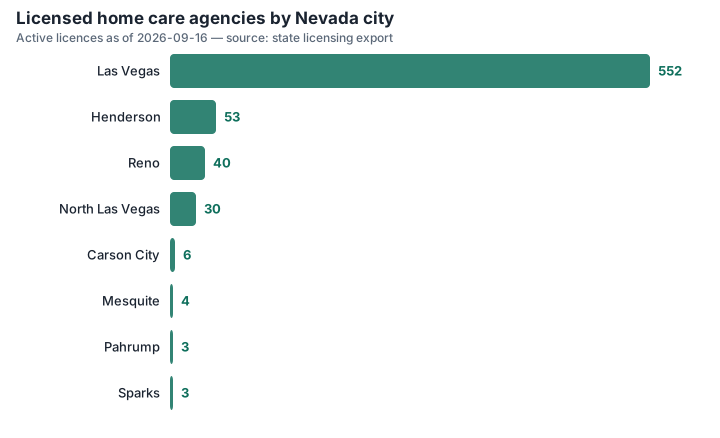
Las Vegas hosts 552 of Nevada’s 703 total licensed home care agencies as of September 2026, representing 78.5% of all state-licensed providers. This concentration leaves the rest of Nevada with just 151 agencies spread across more than 100,000 square miles. Henderson (53 agencies), Reno (40), and North Las Vegas (30) form a middle tier, but beyond these metro areas, options shrink rapidly.

Communities With 6 or Fewer Licensed Agencies
Six Nevada communities have 6 or fewer licensed agencies according to the September 2026 licensing records. Carson City leads this group with 6 agencies, followed by Mesquite (4), Pahrump (3), Sparks (3), Elko (2), and Spring Valley (1).
These numbers matter because a single agency closing, changing ownership, or pausing admissions can eliminate 25% to 50% of a community’s options overnight. Families in these markets face longer wait times and fewer choices when care needs arise.
Understanding Personal Care vs Home Health Licenses
Nevada issues two distinct license types. Statewide, 430 agencies hold personal care licenses while 302 hold home health licenses as of September 2026. Personal care agencies provide help with daily activities like bathing, dressing, and meal preparation. Home health agencies deliver clinical services through nurses, therapists, and other licensed medical professionals.
Only 29 agencies across Nevada hold dual licenses covering both personal care and home health services. In smaller markets, this split matters more. A town with three agencies might have one personal care provider, one home health provider, and one dual-licensed agency. If a family needs both types of care, their options drop to just one provider.
The Nevada Bureau of Health Care Quality and Compliance maintains the licensing roster and can answer questions about specific agencies and their service authorizations.
What Limited Options Mean for Rural Families
When only one or two agencies serve a region, families lose negotiating power. Rates become fixed, availability depends on a single scheduler’s caseload, and service quality varies with no local alternatives. A personality conflict with one caregiver can mean ending care entirely or traveling hours to the next community.
Wait lists in Carson City or Mesquite often run weeks longer than in Las Vegas or Henderson. Agencies in larger markets can hire more caregivers and absorb scheduling gaps. In a two-agency town, one caregiver calling in sick can cascade through multiple families.
Distance compounds every challenge. A Reno agency might technically serve Elko, but a 290-mile round trip for supervisory visits means higher costs and less frequent oversight. Most agencies limit service areas to a one-hour radius, leaving rural residents outside that circle.
Planning Ahead in Smaller Nevada Communities
Families in these markets need longer lead times. Start researching agencies six months before you anticipate needing care, not six weeks. Contact all licensed providers in your area simultaneously. Ask about wait lists, service territories, and whether they currently accept new clients.
If you need both personal care and home health services, confirm which agencies hold dual licenses. The September 2026 licensing records show only 29 such agencies statewide, and most operate in metro areas.
Consider backup plans. Identify which services family members can provide, which require licensed professionals, and what you would do if your primary agency stops serving your area. Some families maintain relationships with agencies in the nearest larger city, accepting higher costs as insurance against local provider shortages.
Check the Nevada Bureau of Health Care Quality and Compliance website regularly. Licensing status changes, new agencies enter the market, and service areas expand. In small markets, a single new provider can double your options.